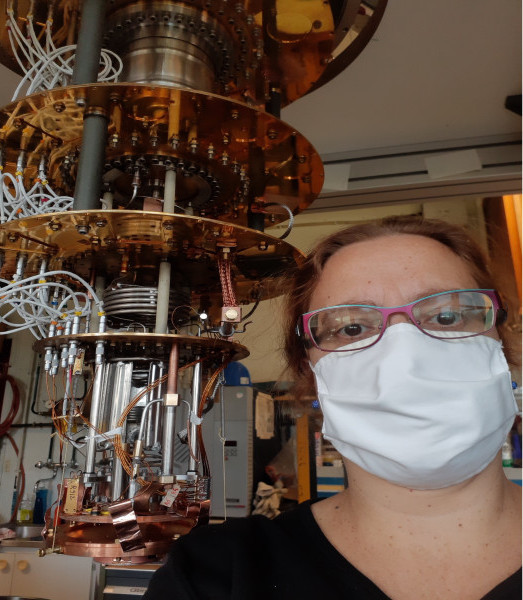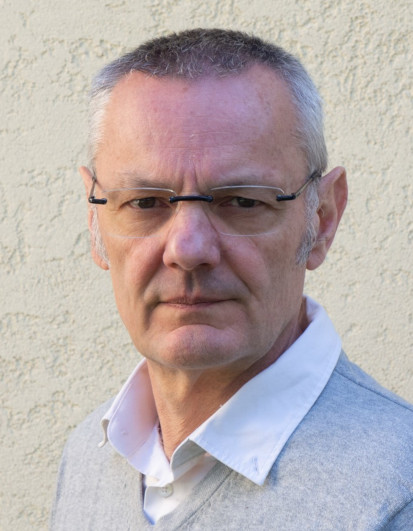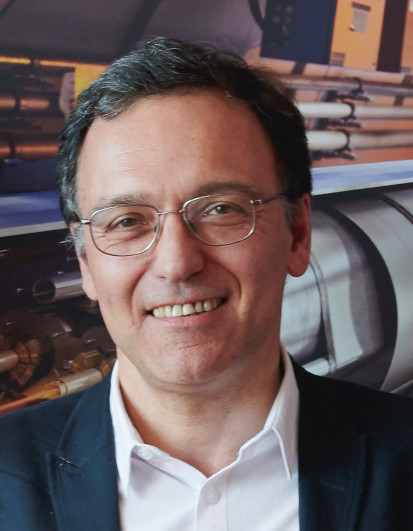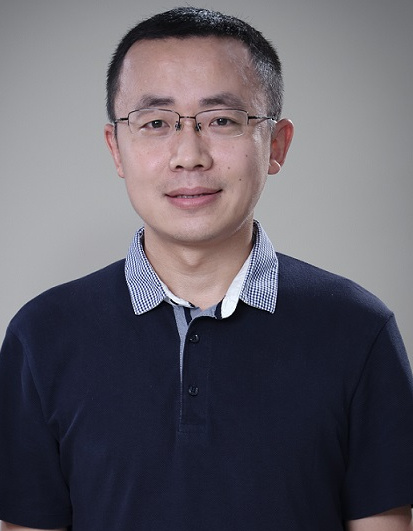
ICFA is pleased to announce the recipients of the 2026 ICFA Instrumentation Awards.
For pioneering hybrid and opaque scintillator technologies, advancing neutrino and dark matter detectors through innovative materials, patented developments, and leadership in next-generation low-background experimental instrumentation.
For the groundbreaking development of ultra-fast silicon detectors for precision timing, now widely used in the particle physics community and enabling 4D tracking detectors.
ICFA is pleased to announce the recipients of the 2025 ICFA Instrumentation Awards.
For her groundbreaking contributions and leadership in the development of the first fully mature dual-phase liquid xenon TPC with a ton-scale target for the XENON experiment, which is making important advances in ultra rare-event searches.
For his outstanding contributions to neutrino physics and detectors using noble gases and for enabling barium ion transport and identification in high-pressure xenon TPCs.
ICFA is pleased to announce the recipients of the 2024 ICFA Instrumentation Awards.
For pioneering and developing an innovative detector technique to achieve a clear separation between scintillation and Cherenkov photons which has the potential to significantly influence the design of future neutrino experiments.
For their vision and leadership in the development of low-mass and high-resolution particle physics detectors, based on commercial CMOS technology, the Monolithic Active Pixel Sensors (MAPS).
ICFA is pleased to announce the recipients of the 2023 ICFA Instrumentation Awards.
For the development of an innovative 3D optical readout for liquid argon time projection chambers that uses novel glass thick GEMS (THGEM) coupled to very fast Timepix cameras to provide high-granularity images and low-energy thresholds.
For the development of novel micropattern gas detector technologies enabling the construction of large-scale detectors with novel geometries for particle physics, and also widespread application to other fields.
ICFA is pleased to announce the recipients of the inaugural 2022 ICFA Instrumentation Awards.
For a leading role in the development of advanced scintillating bolometers for fundamental physics, having made fundamental contributions to the detector technology employed in today’s most advanced experiments.
For groundbreaking contributions and leadership in the development of advanced low-noise electronics instrumentation in particle physics as well as other fields, in particular for liquid argon technology.
Taskforce to mount the next ICFA School
Taskforce to develop a proposal for the next EDIT school
Taskforce to Establish Instrumentation Studentships
Taskforce to Establish Instrumentation Prizes
Taskforce to Establish Interdisciplinary Workshops
University of Melbourne, Australia
Zurich
Mohammad V University, Rabat, Morocco
Institut de Physique des 2 Infinis de Lyon
Oak Ridge National Laboratory USA
INFN Pisa & Universita di Pisa
University of Manchester
Ljubljana/JSI
UNICAMP - Campinas - Brazil
Tata Institute of Fundamental Research, Mumbai, India
KEK
Fermilab
INFN Bari & Universita di Bari
TRIUMF
DESY, Notkestr. 85, 22607 Hamburg, Germany
Chair, Oxford (until 2024)
Chair of the panel
IHEP
EDIT: Excellence in Detectors and Instrumentation Technologies schools are hosted in approximate rotation in Europe, Asia and North America. The EDIT Schools are a great opportunity for students or young postdocs to learn a wide variety of detector technologies and experimental methods in a hands-on environment.
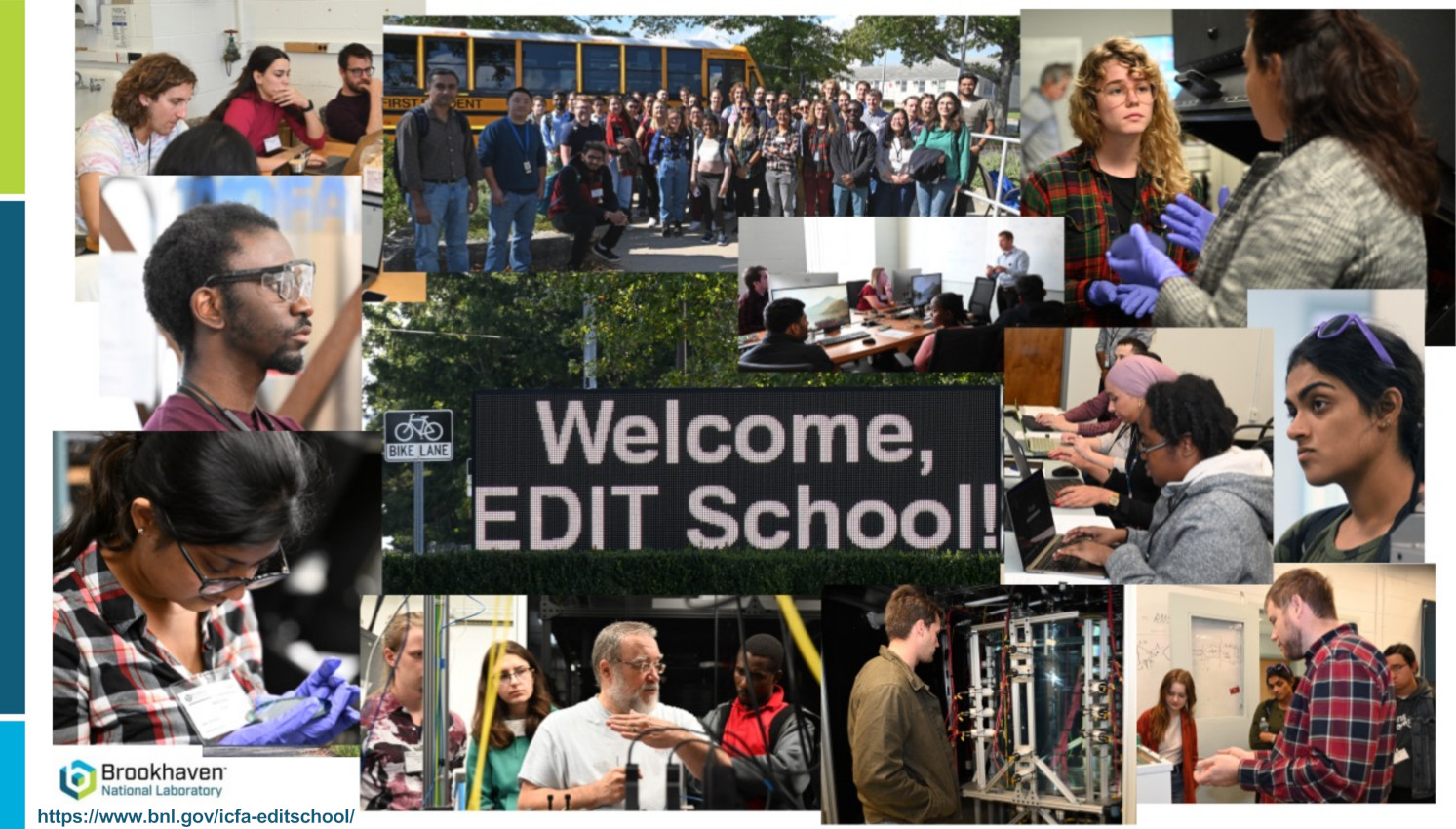
The most recent EDIT School (EDIT 2023) took place from October 10-20, 2023 at Brookhaven National Laboratory (BNL) on Long Island U.S.A. The website can be found here: EDIT School 2023. A powerpoint presentation about the BNL School by the School Organizers, Gabriella Carini and Michael Begel, is here (PDF file, 12MB).
The 2024 EDIT School took place at Fermilab, U.S.A. in November, 2024. The website can be found here: EDIT School 2024.
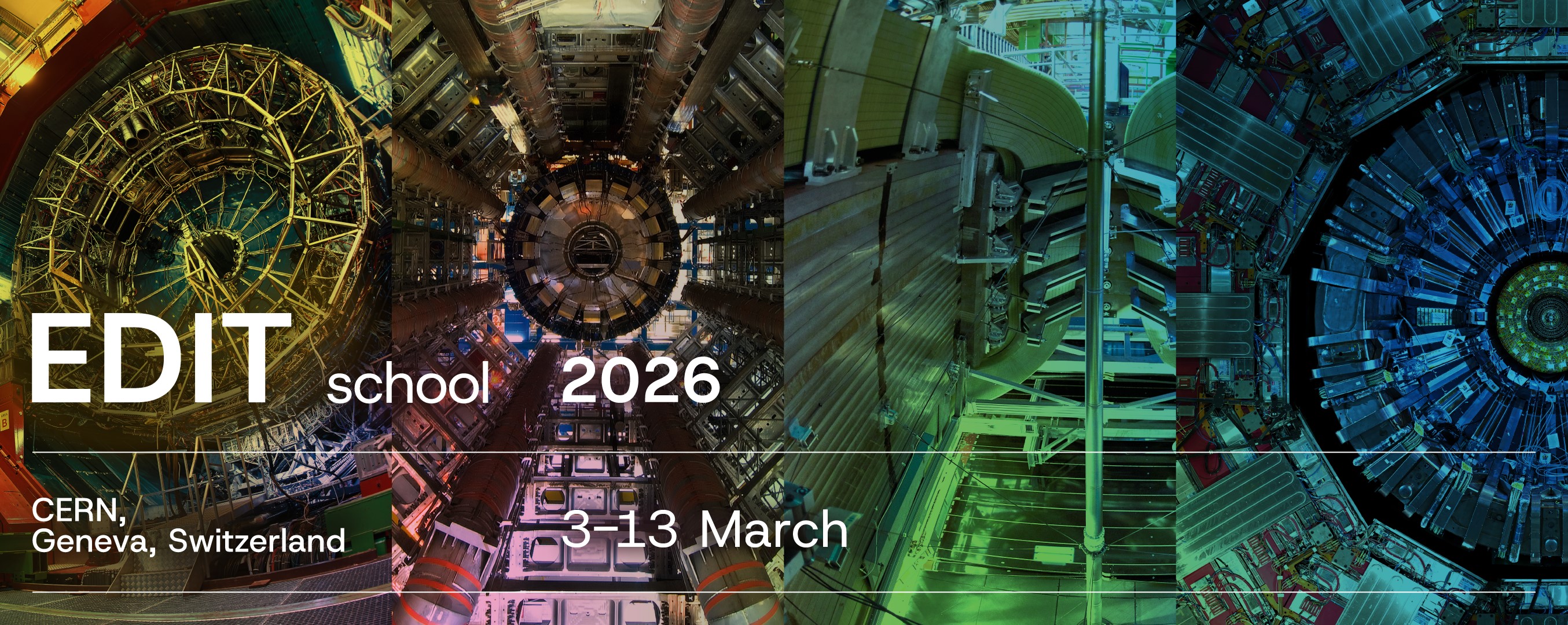
The 2026 EDIT school will take place at CERN from March 3-13, 2026, marking 15 years since its first edition. The program will feature lectures, keynote talks, and hands-on sessions. The website and application form can be found on the website: https://indico.cern.ch/e/edit2026
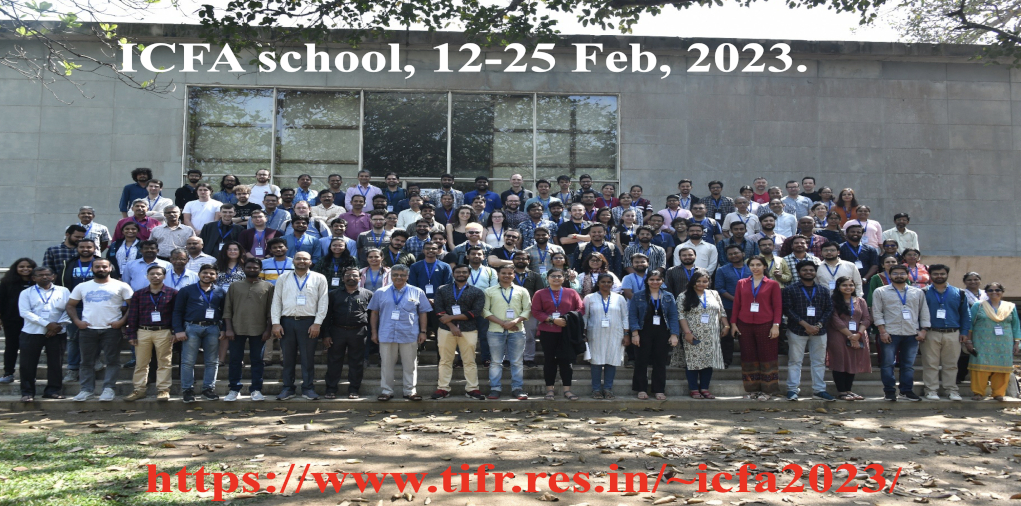
AN ANNOUNCEMENT ABOUT THE NEXT ICFA SCHOOL TO BE HELD IN 2025 WILL BE MADE HERE
With a goal is to increase participation of young scientists (in particular graduate students) in leading-edge instrumentation R&D, and to foster growth of future HEP instrumentation experts and help them to compete subsequently for permanent positions by the creation of prestigious instrumentation studentships providing extended internships at laboratories.
Two thrusts: National and Global
National: identify best practices within our nations and be a catalyst encouraging national communities without instrumentation studentships to consider introducing them, and make it as easy as possible to do so, by adopting best practice suitably modified to match national context (for example length of PhD).
Global: Extend national program to countries without a major lab. Funding for this possibly through EU/UNESCO and others…..
Taskforce has members with significant experience of developing instrumentation studentships, including scope, rules of governance including eligibility, nomination procedures, selection committees and selection procedures. Developing these and a survey of national practices will lead to a proposal to ICFA.
It is important to recognize the achievements of our colleagues. There are relatively few specific awards for instrumentation in our community.
Two thrusts: National and Global
National: identify best practices within our nations and be a catalyst encouraging national communities without prizes to consider introducing prizes, and make it as easy as possible to do so, by adopting best practice suitably modified to match national context.
Global: Create high profile annual international Instrumentation Prizes under the auspices of ICFA for junior, mid-career and senior researchers. A high profile live-streamed awards ceremony where awardees give lectures on their work . Could be incorporated into ICHEP in even years or a standalone event at a major laboratory.
Program of work: Taskforce has members with significant experience of developing prizes, including scope, rules of prize governance including eligibility, nomination procedures, selection committees and selection procedures, prize ceremonies and publicity. Developing the international prizes (in the form of a proposal to ICFA) and a survey of national practices are the next steps

The pace of development across the sciences is breathtaking. We can achieve more in instrumentation development together with our colleagues in other fields of science than we can working apart.
Two thrusts: National and Global
National: identify best practices within our nations and be a catalyst encouraging national communities without interdisciplinary workshops and/or other suitable fora to consider introducing them, and make it as easy as possible to do so, by adopting best practice suitably modified to match national context.
Global: Encourage international conferences to feature interdisciplinary sessions.
We support selected workshops with an interdisciplinary focus or component with an ICFA-IID association. Examples are: MultiHEP 2020 (public access link to be added) and the CPAD Instrumentation Workshop 2021.

The publication of the ICFA Instrumentation Bulletin is an activity of the Panel on Future Innovation and Development of ICFA (International Committee for Future Accelerators)
© ICFA IID 2025